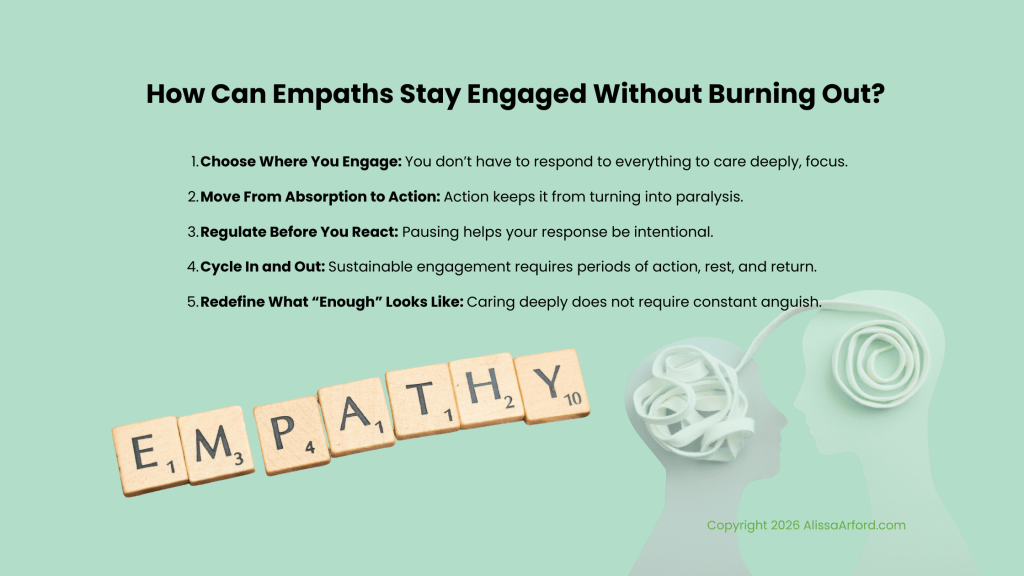
I’ve always known that I’m deeply empathetic.
When someone cries, I cry. When someone gets hurt, I feel it in my own body, a tight chest, a knot in my stomach, a wave of sadness that doesn’t belong entirely to me, but still feels very real.
For most of my life, I thought this was just being sensitive. But lately, it’s felt like too much.
The world feels loud, cruel, and relentless. Injustice is constant and highly visible. Suffering shows up everywhere, in headlines, timelines, and everyday conversations.
I’ve noticed something unsettling. I’m not just sad about what’s happening. I’m personally offended by it. Overwhelmed by the madness of it all. Drained. Sometimes upset in a way that feels disproportionate to what I just read or watched.
I watched this video on BBC.com and then went down a rabbit hole researching empathy.
That’s when I started wondering whether my empathy was defining me.
Why Empathy Can Become Overwhelming
What I learned is that empathy isn’t a single experience.
For some people, especially those who are highly empathetic, it’s not just emotional. It’s physical. Neurological. Full-body.
Psychologists describe this as affective empathy, the experience of feeling with someone rather than simply feeling for them.
For people like me, that can mean:
- Absorbing other people’s moods without realizing it
- Feeling physical sensations in response to others’ pain
- Carrying emotional weight long after the moment has passed
It explains why someone else’s grief can leave me exhausted for days, or why watching injustice unfold can feel like it’s happening to me, not just near me.
Empathy, it turns out, can behave a bit like a sponge.
When Emotional Boundaries Are Thin
Another thing that resonated deeply is that many empathetic people struggle with emotional boundaries.
Not because we don’t value them, but because we’re wired to notice, attune, and respond. When those boundaries are porous, it becomes difficult to tell where someone else’s emotions end and ours begin.
That can lead to:
- Feeling responsible for pain we didn’t cause
- Guilt when we can’t help or fix what we see
- A lingering sense of helplessness in the face of systemic injustice
And in a world where so much can’t be fixed by any one person, that emotional load becomes crushing.
This is where empathy starts to turn against itself.
Empathic Distress vs. Compassion
In the research, there’s an important distinction that helped me make sense of what I’ve been feeling.
Empathic Distress
Empathic (or personal) distress happens when exposure to suffering triggers an intense, self-focused stress response. Instead of motivating care or action, the pain overwhelms the nervous system.
It can look like:
- Emotional flooding
- Anxiety or despair that lingers
- Withdrawal or shutdown
- Feeling devastated for days or weeks
- Becoming desensitized
This is the dark side of empathy, not because caring is bad, but because it’s uncontained.
Compassion
Compassion, on the other hand, allows us to care without collapsing, it’s protective. It involves concern, warmth, and even action, without fully absorbing the pain as our own.
Compassion says: I see this. I care. And I can stay grounded.
Many empathetic people, especially those socialized to be caretakers, were never taught this difference. We learned that feeling more pain meant being more caring.
But research suggests the opposite. Unchecked empathy leads to burnout, not sustained compassion.
The Risk of Carrying Too Much
When empathetic people are repeatedly exposed to others’ suffering, especially through constant media consumption, they’re at risk of vicarious traumatization.
This can show up as:
- Emotional exhaustion
- Physical tension or pain
- Difficulty concentrating or sleeping
- A strong need for isolation to recover
Recognizing this isn’t self-indulgent. It’s self-aware.
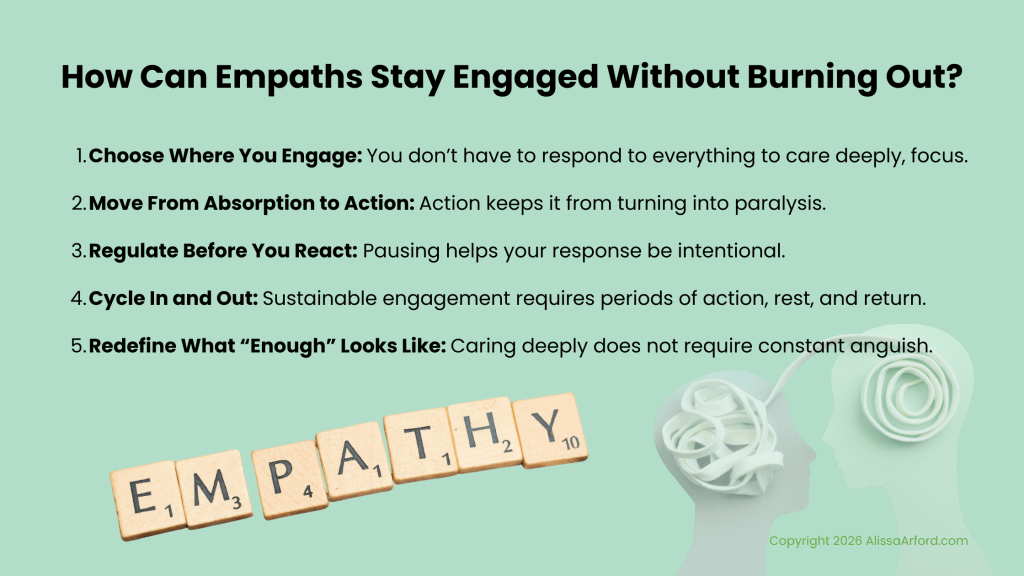
So How Do We Stay Engaged Without Burning Out?
For empathetic people, sustainable engagement requires intention. Not all caring has to happen at full emotional volume.
- Choose Where You Engage
You don’t have to respond to everything to care deeply, focus lets empathy be effective instead of exhausting. - Move From Absorption to Action
Action gives empathy somewhere to go and keeps it from turning into paralysis. - Regulate Before You React
Pausing to ground yourself helps your response be intentional rather than overwhelmed. - Cycle In and Out
Sustainable engagement requires periods of action, rest, and return. - Redefine What “Enough” Looks Like
Caring deeply does not require constant anguish or self-destruction.
A Final Reframe
Not everyone experiences the world this way, and that matters. Some people can witness injustice without feeling it lodge in their bodies, and that doesn’t make them uncaring. But for those of us who do feel it deeply, there’s often an innate reason we take these moments so seriously. Sensitivity isn’t something we decided to perform. It’s how our nervous systems are wired.
So when someone asks why you care so much, or why you can’t just move on, the answer isn’t something you need to justify or soften. You’re responding in alignment with who you are. The work isn’t to become less empathetic to make others more comfortable. It’s to learn how to protect that empathy and compassion so it can keep doing what it does best, notice, respond, and refuse to look away.
 AlissaArford.com
Leave a comment