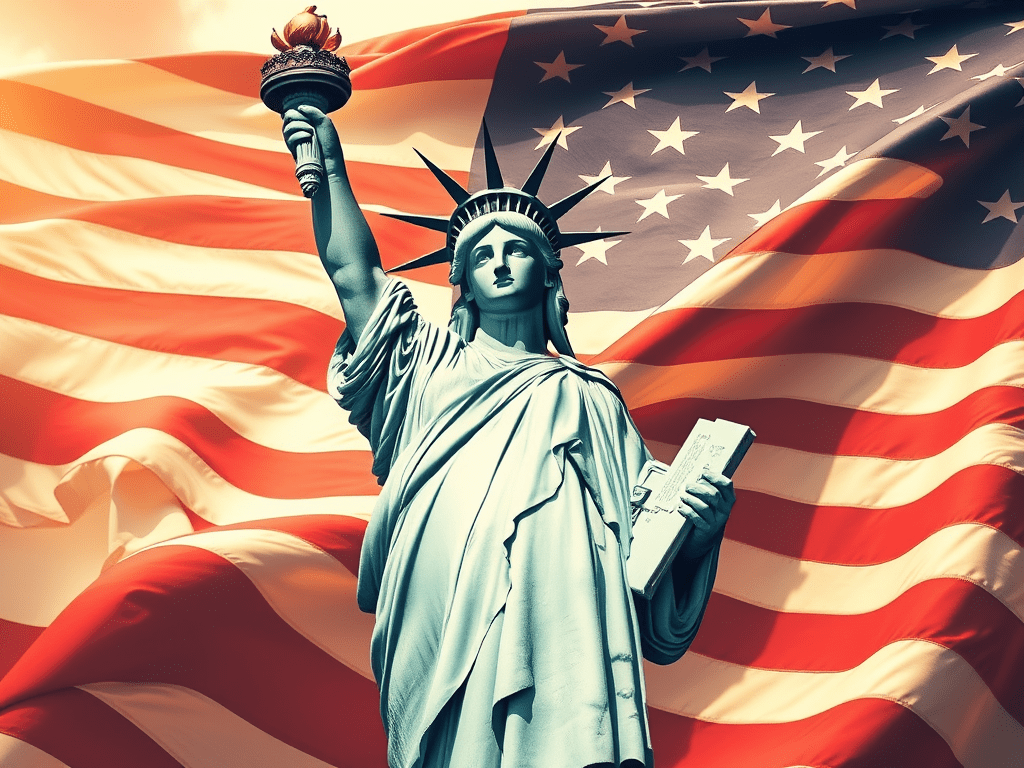
The Unauthorized Rebranding of America
I’ve spent my career helping organizations understand their brands. Lately, I can’t stop thinking about America as a client in need of a brand audit.
Not because change is happening. Change is inevitable. Markets shift. Leaders rotate. Generations redefine priorities. Evolution is healthy.
But alignment is something different.
In my work, when a brand feels “off,” it’s rarely because it’s evolving. It’s because the message and the lived experience no longer match.
Stakeholders are hearing one thing and seeing another. That gap has a name: cognitive dissonance.
And once you start noticing it, you can’t unsee it.
A brand audit examines more than slogans. It looks at positioning, stated values, internal culture and external behavior. It asks whether leadership decisions reinforce the brand promise, or quietly contradict it. Most importantly, it measures how stakeholders actually perceive the institution, not how it perceives itself.
When I apply that framework to the country I live in, I feel the tension.
For most of my life, America’s brand vocabulary has been familiar: freedom protected by law. Equal citizenship. A free press that challenges power. Diversity framed as strength. Constitutional guardrails that limit consolidation.
We’ve never lived those ideals perfectly. But they’ve formed a recognizable architecture.
Lately, I find myself asking the same question I ask clients: Do the stated values align with how people are actually experiencing the institution?
When messaging emphasizes strength or primacy, yet people experience instability or uncertainty, dissonance grows. When leaders speak of freedom while narrowing tolerance for scrutiny, or invoke fairness while bending shared rules, the gap widens.
In business, that gap determines loyalty.
In a democracy, it determines trust.
The most destabilizing thing in branding isn’t a controversial campaign or a tough quarter. It’s sustained misalignment. When stakeholders hear one message and see another, some double down on the message.
Others abandon it entirely. The room fractures.
That’s the part I struggle with.
Not disagreement. Disagreement is normal.
It’s the feeling that many of us are living in entirely different brand experiences. We’re watching the same institution but interpreting its signals in incompatible ways. Some still experience continuity. Others experience erosion.
In branding, when core pillars feel unstable — rule of law, institutional checks, independent scrutiny, equal participation — the entire structure feels uncertain. You can update messaging. You can refresh positioning.
But if the foundation feels negotiable, trust wavers.
As America approaches 250 years, I don’t think the answer is to resist change. Strong brands evolve. They have to.
But the most durable brands distinguish between expression and essence. Messaging changes. Strategy adapts. Leadership rotates. The core identity holds.
I don’t pretend to have a grand solution. I just know that when alignment slips, rebuilding trust takes far longer than losing it.
Maybe this moment isn’t about reinvention at all.
It’s about whether the American brand still feels aligned with its foundational values — the rule of law, equal citizenship, constitutional guardrails — and who gets to decide what it becomes next.
From a brand strategist’s lens, the health of any institution depends on alignment between promise and practice. When that alignment falters, trust follows. And without trust, no brand — not even a 250-year-old one — endures.
Alissa Arford is a Maryland-based writer and marketing strategist who advises organizations on brand identity and institutional strategy.
 AlissaArford.com
Leave a comment