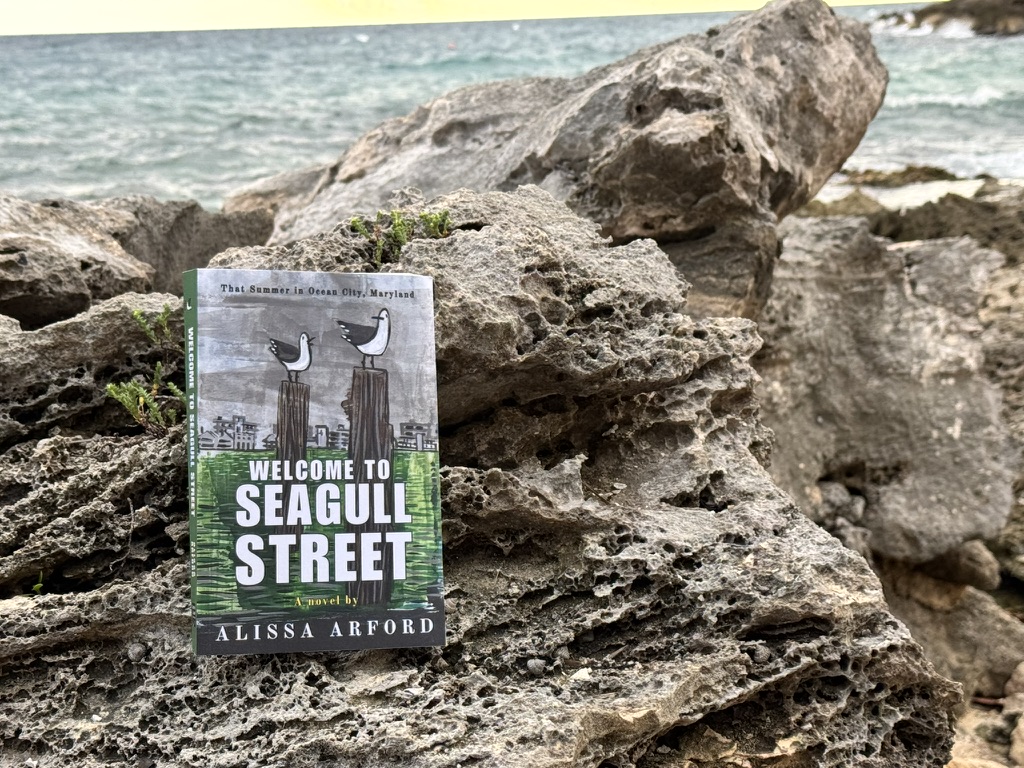
When I was writing my first novel, Welcome to Seagull Street: That Summer in Ocean City (May 2025), everything about the process was hypothetical.
- What if I actually finished writing it?
- What if I liked it?
- What if I hired an editor and a cover artist?
- What if I published it?
- What if I spent money marketing it?
For a long time, the entire project lived in the world of “what if.”
Writing the second book is completely different.
Book One Is All “What If”
My first book took about a year to write and do my own initial edits. Then it took another year to go through professional editing and the publication process.
During most of that time, I didn’t know if the book would ever actually be published.
I wrote and rewrote chapters. I edited and re-edited scenes. I changed dialogue, moved pieces around, and kept asking myself whether the story was really working. The book existed almost entirely in my own world.
It wasn’t until I hired a cover artist that the project suddenly felt real.
Up until that point, it was still possible that the whole thing would stay tucked away on my laptop.
Book Two Comes With Expectations
Writing book two feels different because now there are expectations.
Readers have already met the characters. They’ve spent time on Seagull Street. Some of them are waiting to see what happens next.
That doesn’t necessarily make the writing harder, but it does change the mindset. I want the second book to be better. I want to take everything I learned from writing and publishing the first book and level things up.
And ideally, I’d like to do it in less time. Of course, “less time” is a very relative concept when it comes to writing a novel.
The Good News: The Infrastructure Already Exists
One thing that is definitely easier the second time around is the infrastructure.
With book one, I had to figure out everything from scratch. How do you hire an editor? How do you find beta readers? How do you publish a book? How do you set up a website or social media channels for an author?
Now those foundations already exist and I have a much better sense of how the publishing process works. I also have a stronger network of beta readers and ARC readers who are willing to take an early look at the manuscript.
That part of the process feels much less mysterious than it did the first time.
The Hard Part: Letting the Book Go
What’s harder the second time around is deciding when the book is ready to leave your hands.
My personal editing process tends to involve a lot of stepping away and coming back. I’ll spend a couple of weeks revising, then set the manuscript aside for a while so I can come back to it with fresh eyes.
Each time I return to the story, I see things I want to adjust: lines of dialogue that could be sharper, moments that could be funnier, or scenes that could use a little more foreshadowing.
Eventually, though, there comes a point where the manuscript has to move to the next stage and go to the editor. Letting go of that control is never easy.
Living with the Story
The funny thing about writing a novel is that the story never really leaves your brain. Even when I’m not actively working on the manuscript, I’m thinking about it.
Little ideas pop up throughout the day: a line of dialogue that would make a scene funnier, a subtle way to foreshadow something later in the story, or a small inside joke that a few friends and family members might recognize.
Occasionally, there are moments when I realize I might already be planting seeds for book three. That’s the strange part of writing a series. Once the world exists, your brain keeps expanding it.
Looking Ahead
Right now, my goal is to have book two ready for publication sometime this summer. But writing has a way of ignoring schedules.
Stories tend to take the time they need, and part of the process is learning to respect that. In the meantime, I’m enjoying the strange and wonderful experience of living inside the next chapter of Seagull Street.
 AlissaArford.com
Leave a comment